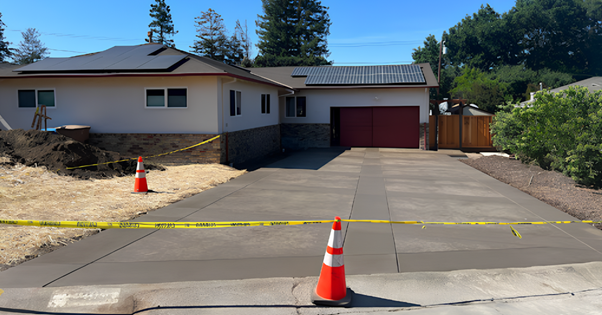
A new driveway does more than give you a place to park. It shapes the first impression of your home, makes everyday access easier, and can serve your property for decades when installed correctly. But before starting a project, most homeowners want to know one thing: how much should they budget?
The cost of a concrete driveway in San Jose, CA, depends on its size, the condition of the existing surface, the amount of site preparation required, and the finish you choose. A simple gray driveway usually costs less than a decorative stamped design. Replacing an old, damaged driveway can also cost more than installing concrete on a properly prepared site.
We believe homeowners should understand where their money goes before making a decision. This guide explains local price estimates, the factors that affect your budget, the differences between concrete and asphalt, and what to expect during installation. Our goal is to help you plan your project with confidence and choose a driveway that suits your home and budget.
Table of Contents
-
- How Much Does a Concrete Driveway Cost in San Jose, CA?
- What Factors Affect the Cost of a Concrete Driveway Installation?
- Is a Concrete Driveway Worth the Investment Compared With Asphalt?
- What Should You Expect From a Concrete Driveway Installation?
- Frequently Asked Questions About Concrete Driveway Costs
1. How Much Does a Concrete Driveway Cost in San Jose, CA?
For a typical residential project, published local estimates suggest that a basic concrete driveway may cost around $8 to $18 per square foot installed. The actual price depends on the work included in the estimate, the site conditions, and the design.
For example, a straightforward driveway with a standard finish may fall toward the lower end of that range. A larger driveway that requires demolition, additional base preparation, reinforcement, drainage improvements, or decorative detailing can cost considerably more.
Local pricing references provide different figures because contractors may include different materials and labor in their calculations. You can review estimates from Bay Area Driveways and a San Jose concrete driveway cost guide to understand the range of published prices. These figures are planning estimates, not guaranteed quotes.
Example concrete driveway budgets
The following examples use an illustrative rate of $8 to $18 per square foot. They help you estimate the possible budget before requesting a site inspection.
| Driveway size | Estimated cost |
| 400 square feet | $3,200 to $7,200 |
| 600 square feet | $4,800 to $10,800 |
| 800 square feet | $6,400 to $14,400 |
| 1,000 square feet | $8,000 to $18,000 |
These calculations multiply the driveway area by the example rate. They are not quotes from Baca Concrete, and they may not cover every expense associated with a specific property.
A small driveway can still cost more per square foot if it requires extensive preparation or difficult equipment access. Likewise, a larger project may benefit from certain economies of scale.
How do you calculate your driveway size?
Measure the length and width of the area you want to pave. Multiply those two measurements to find the square footage of a rectangular driveway.
For example, a driveway measuring 20 feet wide and 30 feet long covers 600 square feet.
If your driveway has a curved entrance, an additional parking space, or an irregular shape, divide it into smaller sections and calculate each area separately. Add the results together to estimate the total surface area.
Once you know the approximate size, you can discuss your plans with a Concrete Driveway Contractor in San Jose. Homeowners can contact them for an assessment of the property, material requirements, and installation options.
2. What Factors Affect the Cost of a Concrete Driveway Installation??
Two driveways with similar dimensions can have very different price tags. The difference often comes down to what happens before the concrete is poured and the type of finish selected.
Here are the main factors we recommend considering when planning your budget.
Driveway size and thickness
The larger the driveway, the more concrete, labor, and preparation it generally requires. Thickness also affects the amount of material needed.
A driveway designed for ordinary passenger vehicles may have different specifications from one intended to support heavier vehicles. The appropriate thickness and reinforcement depend on expected loads, soil conditions, and the project’s requirements.
Choosing a thinner slab simply to reduce the initial price may not be the best long term decision. We recommend discussing how you use your driveway before settling on its specifications.
Excavation and ground preparation
The ground beneath your driveway plays a major role in its performance. If the existing soil is uneven, loose, or poorly compacted, the installation may require excavation and additional preparation.
The crew may need to remove unsuitable material, establish a stable base, and compact it properly before placing the concrete. These steps help support the slab and reduce the risk of movement caused by an unstable base.
San Jose properties can have different soil and drainage conditions, so a site assessment is more useful than assuming every driveway needs the same preparation.
Removal of an existing driveway
Are you replacing a cracked or badly worn driveway? The old concrete may need to be broken into manageable pieces, removed, and hauled away before the new surface can be installed.
The cost of this work depends on the driveway’s thickness, the amount of concrete that needs removal, equipment access, and disposal requirements.
If your property already has a concrete driveway, ask whether demolition and disposal are included in the estimate. This simple question can help prevent unexpected expenses later.
Finish, color, and decorative details
A standard broom finish is a practical choice for many homes. It provides a textured surface that can offer better traction than a smooth finish.
However, some homeowners prefer a more decorative appearance. Available options may include:
● Standard gray concrete: A straightforward, versatile finish that works with many home styles.
● Colored concrete: Adds color to complement exterior walls, landscaping, or other hard surfaces.
● Stamped concrete: Creates patterns that resemble stone, brick, or other materials.
● Exposed aggregate: Reveals decorative stones within the surface and creates a textured appearance.
Decorative finishes usually require additional materials, labor, or finishing steps. We recommend choosing a design that suits both your home and your maintenance preferences rather than selecting a finish based on appearance alone.
Drainage, access, and additional work
Water should drain away from the house rather than collect against the building or form persistent puddles on the driveway. Proper grading and drainage planning are therefore important parts of the project.
If the site needs additional drainage measures, those requirements can increase the overall cost. Narrow access areas, nearby landscaping, retaining edges, or limited space for equipment can also affect the work.
When comparing estimates from contractors in San Jose, CA, look beyond the final number. Ask about preparation, concrete specifications, reinforcement, finishing, cleanup, and any additional work that your property may require.
3. Is a Concrete Driveway Worth the Investment Compared With Asphalt?
Concrete and asphalt can both provide a functional driveway, but they differ in upfront cost, appearance, maintenance, and long-term performance.
Asphalt often has a lower initial installation cost. Concrete generally costs more at the beginning, but its durability and design flexibility may make it an appealing choice for homeowners planning to stay in their homes for many years.
Concrete versus asphalt at a glance
| Feature | Concrete | Asphalt |
| Initial cost | Usually higher | Usually lower |
| Appearance | Gray, colored, or decorative options | Typically dark, uniform surface |
| Maintenance | Routine cleaning and appropriate care | Periodic sealing and maintenance may be needed |
| Heat response | Can become hot in direct sunlight | Can soften in high temperatures |
| Design flexibility | Wide range of finishes and patterns | More limited decorative options |
| Lifespan | Can last several decades with suitable installation and care | Service life varies with installation, traffic, and maintenance |
These are general comparisons. Actual performance depends on the quality of installation, the materials used, local conditions, and ongoing maintenance.
Why do homeowners choose concrete?
One major advantage is its versatility. A concrete driveway can complement a modern home, a traditional property, or a landscape with decorative stone and planting beds.
Concrete can also offer a long service life when the base is properly prepared, the slab is designed for its intended use, and curing and maintenance are handled correctly. Baca Concrete’s concrete driveway services provide further information about the company’s driveway work and available design options.
However, concrete is not immune to cracking. Changes in temperature, ground movement, poor drainage, inadequate preparation, and other factors can affect the surface. Control joints help manage where shrinkage cracks are more likely to form, although they cannot prevent every crack.
Look beyond the initial price
A lower upfront price does not always mean a lower total cost over time. Consider how much maintenance the material may require, how long it could last, and whether its appearance suits your property.
For homeowners who prefer a durable surface with flexible design options, concrete may be a sensible investment. If keeping the initial budget as low as possible is the main priority, asphalt may deserve consideration.
We recommend comparing written estimates for similar project specifications. This gives you a fairer comparison than looking at price per square foot alone.
4. What Should You Expect From a Concrete Driveway Installation?
Understanding the installation process helps you plan around parking, household access, and the time needed before you can use the driveway again.
Although each property is different, most projects follow a series of common steps.
Step 1: Site inspection and planning
The contractor assesses the driveway area, checks access, discusses the intended use, and considers drainage and ground conditions.
This is also the time to discuss the driveway’s dimensions, finish, color, and any additional features. A clear plan helps establish the scope of work and provides a more useful estimate.
Step 2: Removal and preparation
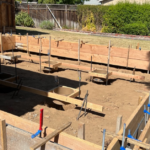
If an old driveway is present, the crew removes the existing material as required. The area is then excavated or adjusted to the planned elevation.
The ground and base are prepared to provide suitable support. Forms establish the driveway’s shape and edges, while reinforcement may be installed according to the design.
Step 3: Concrete placement and finishing
The concrete is delivered and placed within the prepared area. The crew spreads and levels it, then applies the selected finish.
Control joints are formed or cut at appropriate locations to help manage cracking. The crew also checks the intended slope so water can drain as planned.
Step 4: Curing and final care
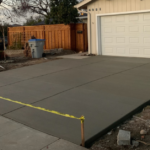
Fresh concrete needs time to gain strength. It may look dry on the surface well before it has developed enough strength to support vehicles.
Follow the contractor’s instructions about foot traffic, parking, watering or curing products, and protecting the surface from damage.
How long does the entire project take?
Many straightforward residential driveway installations take several working days, but the schedule depends on the size of the driveway, demolition requirements, weather, site preparation, and the complexity of the design.
Curing continues after the crew finishes its work. That means the installation may be complete while the driveway is still unavailable for vehicles.
For most standard passenger vehicles, a common guideline is to wait at least seven days before driving on new concrete. Some projects need a longer waiting period. Heavy vehicles may need to stay off the slab for around 28 days, depending on the concrete specifications and curing conditions.
Do not rely on appearance alone to decide when to use the driveway. Confirm the timing with your contractor.
What should you ask before hiring a contractor?
Before approving an estimate, ask these practical questions:
● Does the price include demolition and disposal if needed?
● What thickness and concrete specifications are planned?
● Is reinforcement included where required?
● How will the driveway drain?
● Which finish and control joint layout will be used?
● What is the expected work schedule?
● When can we safely walk and drive on the new surface?
● Are permits or other approvals required for this particular project?
A clear answer to each question helps you understand the work and compare proposals fairly.
Plan Your Concrete Driveway Project With Confidence
A concrete driveway is a practical improvement that can make daily parking easier and give your property a cleaner appearance. The key is to plan for the entire job, not just the cost of the concrete itself. Preparation, drainage, reinforcement, finishing, and curing all contribute to the final result.
Before choosing a contractor, measure your driveway, decide which features matter most, and request a written estimate that explains what the price includes. This approach helps you set a realistic budget and understand the value behind the proposal.
At Baca Concrete, we help homeowners and property owners in San Jose plan concrete projects around their needs, property conditions, and design preferences. We provide free estimates so you can discuss your driveway project and understand the work involved before making a decision.
Ready to plan your new driveway? Visit Bacaconstructions or call 408 393 4145 to discuss your project and request an estimate.
5. Frequently Asked Questions About Concrete Driveway Costs
Is a concrete driveway more expensive than an asphalt driveway in San Jose?
Concrete usually costs more to install than asphalt. However, the long-term cost depends on the quality of installation, maintenance needs, and how long each surface lasts. Concrete offers more decorative options and can serve for decades with suitable installation and care. Asphalt often has a lower upfront cost but may require periodic sealing and other maintenance.
How much does it cost to replace an existing concrete driveway in San Jose?
Replacement costs depend on the driveway's size, the condition and thickness of the existing slab, demolition, disposal, ground preparation, and the new finish. Using an illustrative installed rate of $8 to $18 per square foot, a 600-square-foot driveway would cost approximately $4,800 to $10,800. This is a planning calculation, not a replacement quote. Demolition and other site-specific work may increase the total if they are not included in the rate.
How long does it take to install a concrete driveway?
A straightforward residential driveway may take several working days to install. Larger driveways, difficult access, extensive excavation, drainage work, decorative finishes, or poor weather can extend the schedule. Concrete also needs time to cure after installation, so the completion date does not necessarily mean you can immediately park on it.
How long should you wait before driving on a new concrete driveway?
For a typical concrete driveway, wait at least seven days before allowing standard passenger vehicles onto the surface, unless your contractor provides different instructions based on the concrete mix and site conditions. Heavier vehicles may need to wait around 28 days. Concrete generally continues gaining strength for approximately 28 days, so protecting the slab during this period is important.
Leave a Reply