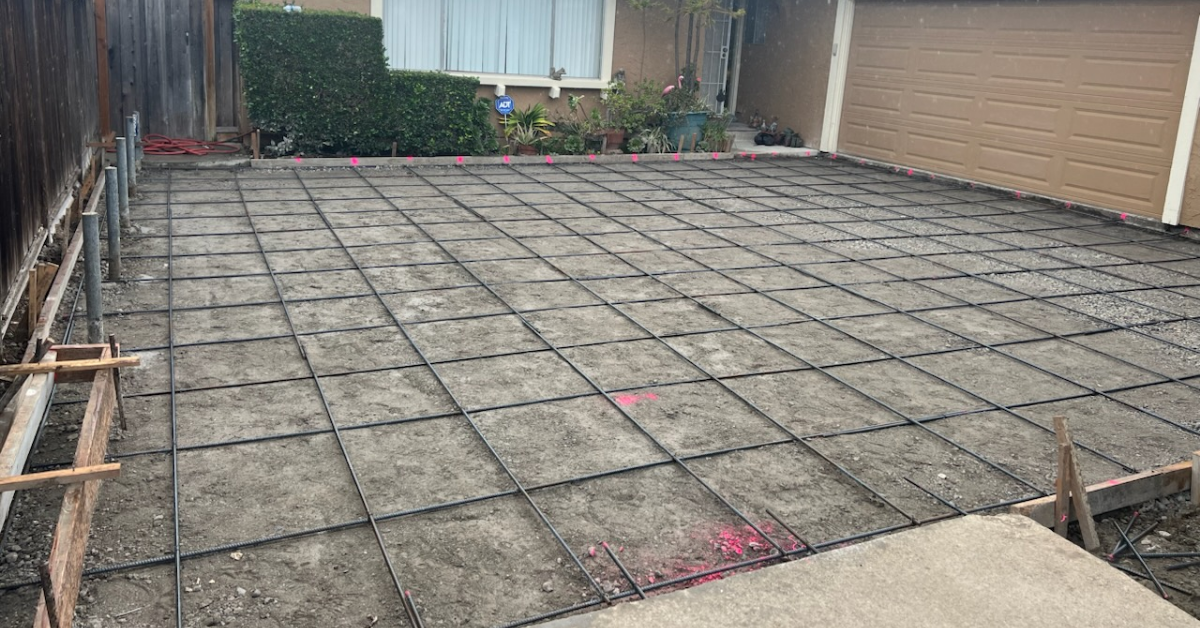
A concrete driveway takes a lot of daily use. Cars come and go, the surface sits under the sun, and changing moisture conditions can slowly affect its appearance and performance. Over time, even a well-maintained driveway can start to look worn.
That raises a common question: How often does a concrete driveway need resurfacing in San Jose?
There is no fixed schedule that works for every driveway. The right time depends on the age of the concrete, the amount of traffic, the condition of the surface, previous maintenance, drainage, and the type of damage present.
We always recommend looking at the condition of the driveway instead of relying only on its age. A driveway with minor surface wear may continue serving your home for years. Another driveway may need attention sooner because of widespread surface deterioration.
For homeowners considering driveway resurfacing in San Jose, understanding the signs and the process can make the decision much easier.
Table of Contents
- When Should You Consider Driveway Resurfacing?
- What Does Driveway Resurfacing Actually Do?
- Resurfacing or Replacing Your Concrete Driveway?
- How Long Can a Resurfaced Driveway Last?
- How We Approach a Concrete Driveway Project
- Give Your Driveway a Closer Look
- 7. Frequently Asked Questions
When Should You Consider Driveway Resurfacing?
A driveway does not always need complete replacement when the surface starts looking tired. Resurfacing may be worth considering when the underlying concrete remains suitable but the surface has developed cosmetic or relatively shallow damage.
Here are some common signs that it may be time to take a closer look.
Surface Wear Is Becoming Noticeable
Concrete can lose its fresh appearance over the years. The surface may become rough, worn, stained, or faded. If the driveway still has a suitable base and the damage is mainly at the surface, resurfacing may provide a way to improve its appearance without removing everything.
Small Cracks Are Appearing
A few small cracks do not automatically mean that the driveway needs complete replacement. However, cracks should not simply be ignored. Their size, depth, location, and pattern matter. We look at the overall condition before recommending a solution. If the damage extends deeper or the concrete has significant movement, resurfacing alone may not be the right approach.
The Surface Looks Uneven or Worn
A driveway can become visually uneven even when the underlying concrete is still usable. Changes in texture, surface wear, and previous repairs can make the driveway look inconsistent. Resurfacing may help create a more uniform finished appearance when the existing concrete is appropriate for the process.
Previous Surface Repairs Are Visible
Have you patched the same driveway several times? Different repair areas can eventually make the surface look inconsistent. If the concrete itself remains suitable, resurfacing can sometimes provide a more consistent finish. The important point is that resurfacing is not simply a way to hide every concrete problem. The existing surface needs to be evaluated first.
What Does Driveway Resurfacing Actually Do?
Think of resurfacing as giving an existing concrete surface a new finish rather than automatically replacing the entire driveway. The exact process depends on the existing condition of the concrete and the selected resurfacing method.
Before we begin, we look at the surface and consider factors such as cracking, wear, drainage, previous repairs, and the overall condition of the driveway. Preparation is especially important. The existing surface needs to be clean and suitable for the new material. Damaged areas may need attention before resurfacing begins. Proper preparation helps the new surface bond correctly and provides a better finished result.
Why Homeowners Consider Resurfacing
There are several reasons a homeowner may choose resurfacing.
Appearance: A worn driveway can make the front of a home look older than it is.
Surface consistency: Resurfacing can create a more uniform appearance when the existing concrete is suitable.
Extended use: Addressing surface deterioration can help homeowners continue using an otherwise serviceable driveway.
Design options: Depending on the project, homeowners may have options for the look and finish of the resurfaced surface.
Still, resurfacing is not the answer to every problem. If the concrete has severe structural damage, major movement, or extensive deterioration, replacement may be more appropriate. That is why we do not recommend choosing a resurfacing solution based only on photographs or the age of the driveway.
Resurfacing or Replacing Your Concrete Driveway?
This is one of the most important questions homeowners ask. The answer depends on the condition of the existing driveway. If the underlying concrete remains sound and the primary concerns involve surface wear, resurfacing may be worth considering.
If the driveway has extensive cracking, significant settling, major sections that have broken apart, or other serious damage, a new driveway may be the more suitable option.
What We Look At
When assessing a driveway, we consider:
- The size and depth of cracks
- The amount of surface deterioration
- Whether sections have moved or settled
- Drainage around the driveway
- Previous repair work
- The age and history of the concrete
- How the driveway is used
- The overall condition of the existing surface
This approach matters because two driveways can look similar at first glance but need completely different solutions. One may benefit from resurfacing. Another may require repair or replacement. Our role is to help homeowners understand those differences before work begins.
Can Cracked Concrete Be Resurfaced?
Sometimes, yes. But resurfacing does not automatically solve every type of cracking. Minor surface cracks may be addressed as part of preparation, depending on their condition. Deeper cracks, active movement, extensive deterioration, or significant structural problems may require a different solution. That is why an inspection is important.
A good resurfacing project starts with knowing whether the existing driveway is actually a suitable candidate.
How Long Can a Resurfaced Driveway Last?
There is no single lifespan that applies to every resurfaced driveway. The service life depends on the condition of the existing concrete, preparation, materials, installation, drainage, weather, vehicle traffic, and maintenance.
A properly prepared and installed surface can provide years of service, but homeowners should not think of resurfacing as a permanent solution for concrete that has already failed extensively. Good maintenance also matters.
Keeping the driveway clean, addressing drainage concerns, avoiding unnecessary heavy loads, and paying attention to new damage can help protect the surface.
San Jose Conditions Matter
San Jose has a generally mild climate, but outdoor concrete still faces temperature changes, sunlight, rain, and everyday vehicle traffic. Water is particularly important. If water repeatedly collects around the driveway or reaches areas where it can affect the supporting material, it may contribute to future problems.
We encourage homeowners to watch how water moves around the driveway after rain. Standing water can be a useful warning sign that drainage deserves attention.
How We Approach a Concrete Driveway Project
When someone contacts us about a driveway, we start by understanding the problem.
What are you seeing?
How long has it been happening?
Has the driveway been repaired before?
Do you want to improve its appearance, address surface wear, or deal with a more serious concrete issue?
These questions help us understand what you actually need.
As a Concrete Driveway Contractor in San Jose, we know that every property presents different conditions. A driveway that receives regular vehicle traffic may have different needs from one that is lightly used. We also understand that homeowners want clear information before making a decision. That is why we focus on the condition of the existing concrete and the goals of the project.
What Homeowners Can Do Before Calling
You can start by walking around your driveway and taking a close look.
Check for:
- New or expanding cracks
- Chipped areas
- Rough surface texture
- Discoloration
- Standing water
- Previous patching
- Uneven sections
- Areas that appear to be deteriorating faster than others
Take a few photographs if helpful. Most importantly, do not assume that every crack means the entire driveway needs to be replaced. Sometimes the surface needs attention. Sometimes repair is appropriate. Sometimes resurfacing can make sense. And sometimes replacement is the better long term option.
The goal is to match the solution to the actual condition of the concrete.
Give Your Driveway a Closer Look
A worn concrete driveway does not always mean you need to start over. Sometimes the surface needs attention. Sometimes resurfacing is a practical option. Other times, the condition of the existing concrete points toward repair or replacement.
The key is knowing the difference. If your driveway has started looking tired, cracked, rough, or uneven, we can help you understand what may be happening and what options are available. A careful assessment can save you from paying for work you may not need while helping you address problems before they become more difficult to manage.
When you are considering driveway resurfacing in San Jose, start with the condition of the concrete. From there, the right solution becomes much easier to identify.
Frequently Asked Questions
What signs indicate that a concrete driveway needs resurfacing?
Common signs include widespread surface wear, fading, rough texture, minor surface cracking, visible patchwork, and a generally worn appearance. If the underlying concrete remains suitable, resurfacing may be an option. Severe cracking, significant movement, major settling, or extensive deterioration may require a different approach.
How long does concrete driveway resurfacing typically last?
The lifespan of resurfacing varies based on preparation, materials, installation quality, drainage, traffic, weather, and maintenance. A properly prepared surface can last for years, but resurfacing should not be viewed as a replacement for addressing serious underlying concrete problems.
Is resurfacing better than replacing a damaged concrete driveway?
Neither option is automatically better. Resurfacing can make sense when the existing concrete remains suitable and the primary concern is surface deterioration. Replacement may be more appropriate when the driveway has extensive cracking, major movement, severe deterioration, or other conditions that affect the existing slab.
How much does concrete driveway resurfacing cost in San Jose?
The cost depends on factors such as driveway size, surface condition, preparation requirements, repairs, materials, access, and the type of finish selected. Because every driveway is different, a project specific assessment provides a more useful estimate than a general price range.
Can cracked or uneven concrete driveways be resurfaced?
It depends on the type and extent of the damage. Minor surface issues may be suitable for resurfacing after proper preparation. Significant cracks, movement, settling, or severe deterioration may require repair, leveling, or replacement instead. We recommend evaluating the existing concrete before choosing resurfacing.
How can homeowners maintain a resurfaced concrete driveway?
Keep the surface clean, watch for standing water, maintain proper drainage, avoid unnecessary heavy loads, and address new cracks or damage early. Regular cleaning and attention to drainage can help protect the surface and extend its useful life.
Leave a Reply