
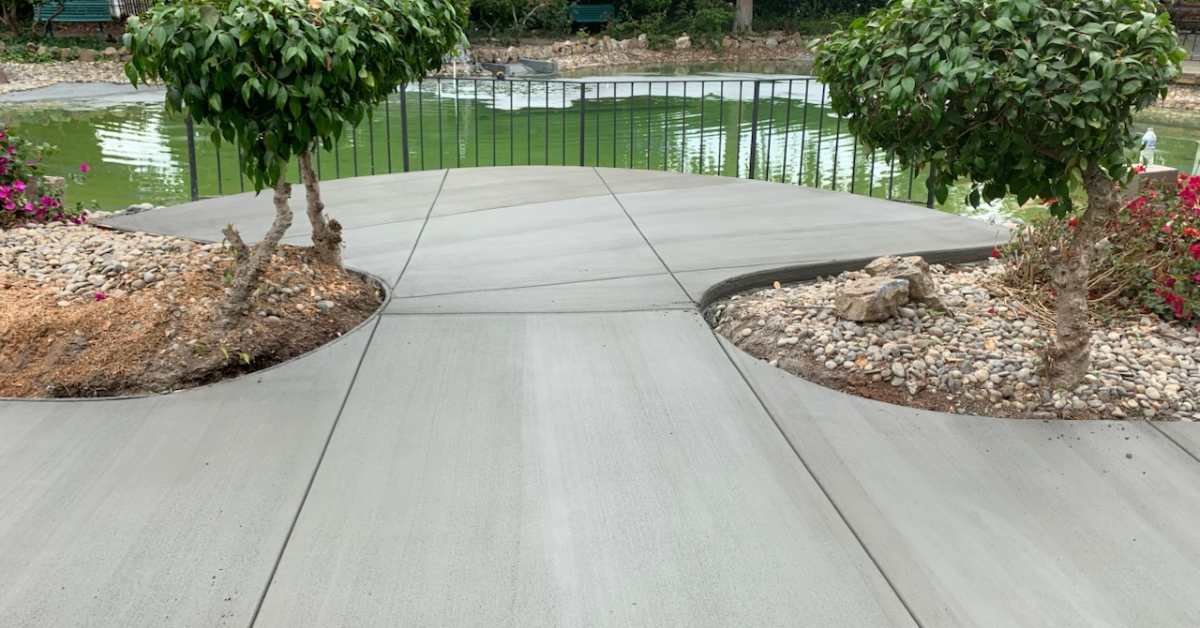
Have you ever looked at a beautiful home and thought, “Something about that outdoor space just feels right”?
Often, it is not only the house itself. The driveway, patio, walkway, steps, or pool area can make a huge difference. The right concrete design can bring these areas together and make the entire property feel more complete.
That is where Decorative Concrete in San Jose can make a real difference. Instead of settling for a basic gray surface, homeowners can choose colors, patterns, textures, and finishes that suit the character of their property.
But there is one important point we always keep in mind. A decorative concrete design should not look like it was added as an afterthought. It should feel like it belongs with the home.
At Baca Concrete, we work with homeowners to create concrete surfaces that balance appearance, function, durability, and personal style. Our services include patios, driveways, walkways, steps, stamped concrete, colored concrete, overlays, and sealing services. We have more than 25 years of industry experience and serve San Jose and surrounding areas.
So, how do you choose the right look?
Let’s break it down.
Table of Contents
- Start With Your Home’s Existing Style
- Decorative Concrete in San Jose
- Choose Colors and Textures Carefully
- Consider Where the Concrete Will Be Used
- Make the Final Design Decision With Confidence
- Why Professional Planning Matters
- Bottom Line
- Frequently Asked Questions
Start With Your Home’s Existing Style
Before we talk about patterns and colors, we like to start with the house itself.
Take a look at your home’s exterior.
Is it modern and clean?
Does it have a traditional appearance?
Is the exterior warm and rustic?
Does it use brick, stone, stucco, wood, or another material?
Your answers can help narrow down your concrete design choices.
Modern Homes
Modern homes often look best with simple concrete patterns.
A smooth surface, subtle color variation, large geometric patterns, or a clean linear design can complement modern architecture without making the outdoor space feel too busy.
For example, a soft gray concrete patio with simple borders can work beautifully with a home that has straight architectural lines.
Traditional Homes
Traditional properties give you more room to play with classic patterns.
Brick patterns, slate textures, cobblestone inspired designs, and softer earth tones can create a warm appearance that works well with traditional exterior materials.
Rustic Homes
If your home has a rustic feel, you might want a concrete finish that resembles natural stone or aged materials.
Warm browns, muted tans, sandstone tones, and natural looking textures can help the concrete blend with landscaping and other exterior features.
The goal is not to copy every detail of your home.
The goal is to create harmony.
When the house, landscaping, and concrete work together, the property looks intentional rather than pieced together.
Explore Your Decorative Concrete in San Jose Options
One of the best things about decorative concrete is the number of design possibilities available.
Plain concrete is only one option.
With the right techniques, concrete can be given patterns, textures, and colors that dramatically change its appearance.
Stamped Concrete
Stamped Concrete in San Jose is one of the most popular choices for homeowners who want the appearance of materials such as stone, brick, slate, tile, or wood while still using concrete as the main surface material.
During the stamping process, patterns are pressed into freshly placed concrete before it fully hardens.
The result can create a surprisingly detailed surface.
At Baca Concrete, we offer stamped concrete installation for areas such as patios, driveways, walkways, sidewalks, fire pit areas, outdoor kitchens, and pool decks. Our available patterns can include slate, flagstone, tile, brick, wood inspired designs, circular patterns, and other decorative layouts.
This gives homeowners plenty of freedom.
Colored Concrete
Color is another simple way to change the personality of a concrete surface.
Instead of using standard gray, homeowners can choose shades that complement their home.
Think warm beige near a cream colored stucco home.
Think charcoal near a contemporary exterior.
Think earthy brown around a landscape filled with natural stone and greenery.
The right color can make a large surface feel softer and more connected to its surroundings.
Decorative Overlays
Sometimes the existing concrete surface may be a candidate for an overlay rather than complete replacement.
Decorative overlays can add color, texture, or patterns to an existing surface when the underlying conditions are suitable.
However, an overlay is not appropriate for every situation.
We always recommend having the existing concrete evaluated first. Surface condition, stability, moisture, cracks, and other factors can affect whether an overlay is a practical choice.
Borders and Accent Areas
Here is another design idea that homeowners sometimes overlook.
You do not necessarily need the entire surface to have a complicated pattern.
A simple field pattern with a decorative border can create a polished appearance.
For example, a driveway might use one primary texture with a contrasting border around the edges.
A patio could have a central pattern surrounded by a simpler perimeter.
Small design details can make a surprisingly big visual difference.
Choose Colors and Textures Carefully
Choosing a pattern is only part of the process.
Color and texture matter just as much.
In fact, two patios can have exactly the same stamped pattern and still look completely different because of their color combinations.
Start With the Exterior Colors
Look at your home’s roof, siding, stucco, brick, trim, doors, and landscaping.
You do not need to match one color exactly.
Instead, look for colors that complement each other.
A good rule is to avoid creating too many competing colors.
If your house already has several strong colors, a quieter concrete tone may work better.
If your home has a simple exterior, a more detailed concrete pattern may add visual interest.
Think About Texture
Texture changes the way light interacts with the concrete.
A textured surface can create shadows and highlights that make the design more noticeable.
But texture also has a practical side.
Walkways, patios, pool decks, and other outdoor areas need to be considered based on how people will use them. A design should look attractive while still providing a practical walking surface.
Do Not Choose From a Tiny Sample Alone
This is one piece of advice we strongly recommend.
Concrete colors and finishes can look different depending on lighting, surrounding materials, surface size, and application.
A small sample may look perfect in a showroom or photograph.
Your actual driveway may receive bright afternoon sunlight.
Your patio may sit beneath trees.
Your walkway may be surrounded by green landscaping.
That is why we encourage homeowners to think about the complete setting rather than choosing a color in isolation.
Consider Where the Concrete Will Be Used
A design that works beautifully on a patio may not be the best choice for a driveway.
The purpose of the surface should always influence the design.
Driveways
A driveway is one of the first things people see when they arrive at your home.
It also receives regular vehicle traffic.
For that reason, we recommend thinking about durability, maintenance, color, pattern scale, and overall visual balance.
A large driveway can sometimes benefit from a defined border or repeating pattern that breaks up the surface.
Patios
Patios offer more freedom.
This is where you can create a real outdoor focal point.
You might use a natural stone inspired stamp around a seating area or choose a circular pattern around a fire pit.
The design should also consider furniture placement.
We always suggest thinking about where tables, chairs, grills, umbrellas, and other outdoor features will sit before finalizing the pattern.
Walkways
Walkways connect different areas of your property.
Because of this, they should complement both the home and the surrounding landscape.
A simple pattern may be enough.
You might also use a border to visually define the walking path.
Steps
Concrete steps do not have to be boring.
Decorative patterns, colors, and finishes can make steps feel like part of the overall exterior design.
The base, dimensions, grading, drainage, forms, and finishing details all matter during installation. Baca Concrete offers concrete step installation and decorative finish options including different patterns, stains, and colored concrete.
Make the Final Design Decision With Confidence
Now comes the fun part.
You have looked at the house.
You have considered the location.
You have explored colors and patterns.
So how do you narrow everything down?
We suggest using a simple three question test.
Does It Match?
Look at the concrete alongside the exterior of your home.
Does the color work with the walls?
Does the pattern suit the architectural style?
Does it complement the landscaping?
If yes, you are on the right track.
Does It Fit the Space?
A pattern that looks great on a small walkway may become overwhelming across a huge driveway.
Likewise, a very small pattern can disappear on a large patio.
Think about scale.
Large areas usually benefit from designs that remain visually balanced from a distance.
Will You Still Like It Later?
Trends come and go.
Your driveway or patio will be part of your property for years.
We recommend choosing a design you genuinely like rather than selecting something only because it happens to be popular this year.
A timeless pattern with a carefully selected color can remain attractive for a long time.
Why Professional Planning Matters
Decorative concrete may look simple when you see the finished surface.
The installation process is another story.
Good results depend on proper preparation, concrete placement, timing, finishing, pattern application, color selection, and sealing.
Small mistakes can affect the final appearance.
That is why professional planning matters.
We look at the intended use of the space, the existing property, the desired appearance, and the practical requirements before moving forward.
Baca Concrete is locally based in San Jose and has more than 25 years of experience. The company describes itself as local and family owned, licensed and insured, and offers free estimates.
For us, the design process is not simply about asking, “Which pattern do you want?”
It is about asking better questions.
Where will the concrete be installed?
How will the space be used?
What style does the home already have?
Which colors are already present?
How much visual detail does the property need?
What type of maintenance will the surface require?
Those answers help create a design that looks good for the right reasons.
Bottom Line
Choosing decorative concrete should be exciting, but it should not be rushed.
Start with your home.
Look at its architecture, exterior colors, landscaping, and overall character.
Then think about the purpose of the concrete surface.
A driveway needs to handle regular vehicle use. A patio may become an outdoor gathering area. A walkway needs to connect spaces naturally. Steps need to combine appearance with practical construction.
From there, consider patterns, colors, textures, borders, and finishes.
Decorative Concrete in San Jose gives homeowners plenty of creative possibilities. Stamped Concrete in San Jose can also provide the look of materials such as brick, slate, tile, stone, or wood while giving you the flexibility of concrete.
Most importantly, do not choose a design simply because it looks good in a photograph.
Choose one that looks right on your home.
That is the difference between concrete that simply fills a space and concrete that becomes part of the property.
If you are planning a new driveway, patio, walkway, steps, or another decorative concrete project, we are here to help you think through the options and choose a practical design for your property. Baca Concrete provides free estimates and serves San Jose and surrounding areas.
Frequently Asked Questions
What decorative concrete design options are available for homeowners?
Homeowners can choose from stamped patterns, colored concrete, decorative borders, textured finishes, overlays, and sealed finishes. Stamped designs can resemble slate, flagstone, brick, tile, stone, or wood. The right choice depends on the home's style, surface location, personal preference, and intended use.
How do I choose a decorative concrete style that complements my home's exterior?
Start by looking at your home's architecture, exterior colors, roof, trim, landscaping, and existing hardscape. Choose a concrete color that complements rather than competes with these features. Then select a pattern that suits the home's character and the size of the concrete area.
What is the difference between stamped concrete and other decorative concrete finishes?
Stamped concrete uses patterns pressed into freshly placed concrete to create a textured appearance that can resemble materials such as stone, brick, slate, tile, or wood. Other decorative finishes may rely primarily on color, stains, overlays, textures, or borders. Each method creates a different visual effect.
How do color and texture affect the appearance of decorative concrete?
Color can make concrete feel warmer, cooler, brighter, darker, or more natural. Texture adds depth by creating variations in the surface and the way light reflects from it. We recommend considering both together because the combination can have a major impact on the finished appearance.
Is decorative concrete suitable for driveways, patios, and walkways?
Yes. Decorative concrete can be used for many outdoor applications, including driveways, patios, and walkways, when the design and installation are appropriate for the intended use. Baca Concrete provides concrete driveway, patio, walkway, and stamped concrete services.
How durable is decorative concrete, and what maintenance does it require?
Concrete is known for its durability and relatively low maintenance. Proper installation, suitable drainage, appropriate use, and routine maintenance can help support long service life. Sealing may also be used with certain decorative concrete applications to help protect the surface and maintain its appearance.
Should I work with a professional concrete contractor to choose a decorative concrete design?
Yes. A professional can help evaluate the site, intended use, existing concrete, design scale, color choices, surface preparation, and finishing requirements. We believe good planning is essential because a decorative concrete project needs to look attractive while also performing properly for its intended purpose.
Leave a Reply